
Fire cider is the spicy, tangy, immune-boosting tonic that's earned cult status in the wellness world — and I had a front-row seat to its rise.
For years, I worked for an infused vinegar company that made their own fire cider. My job was introducing it to thousands of people — at farmers markets, trade shows, and specialty food stores across the country. I watched skeptics take their first sip, wince at the heat, and come back the next week asking for a bigger bottle.
That experience taught me what makes fire cider work: the balance of heat, tang, and sweetness, and the way it wakes up your whole system. Now I keep a jar going in my own kitchen every fall, and it's become the backbone of my cold-season routine — stirred into hot toddies, drizzled on roasted vegetables, or taken straight by the spoonful when I feel something coming on.
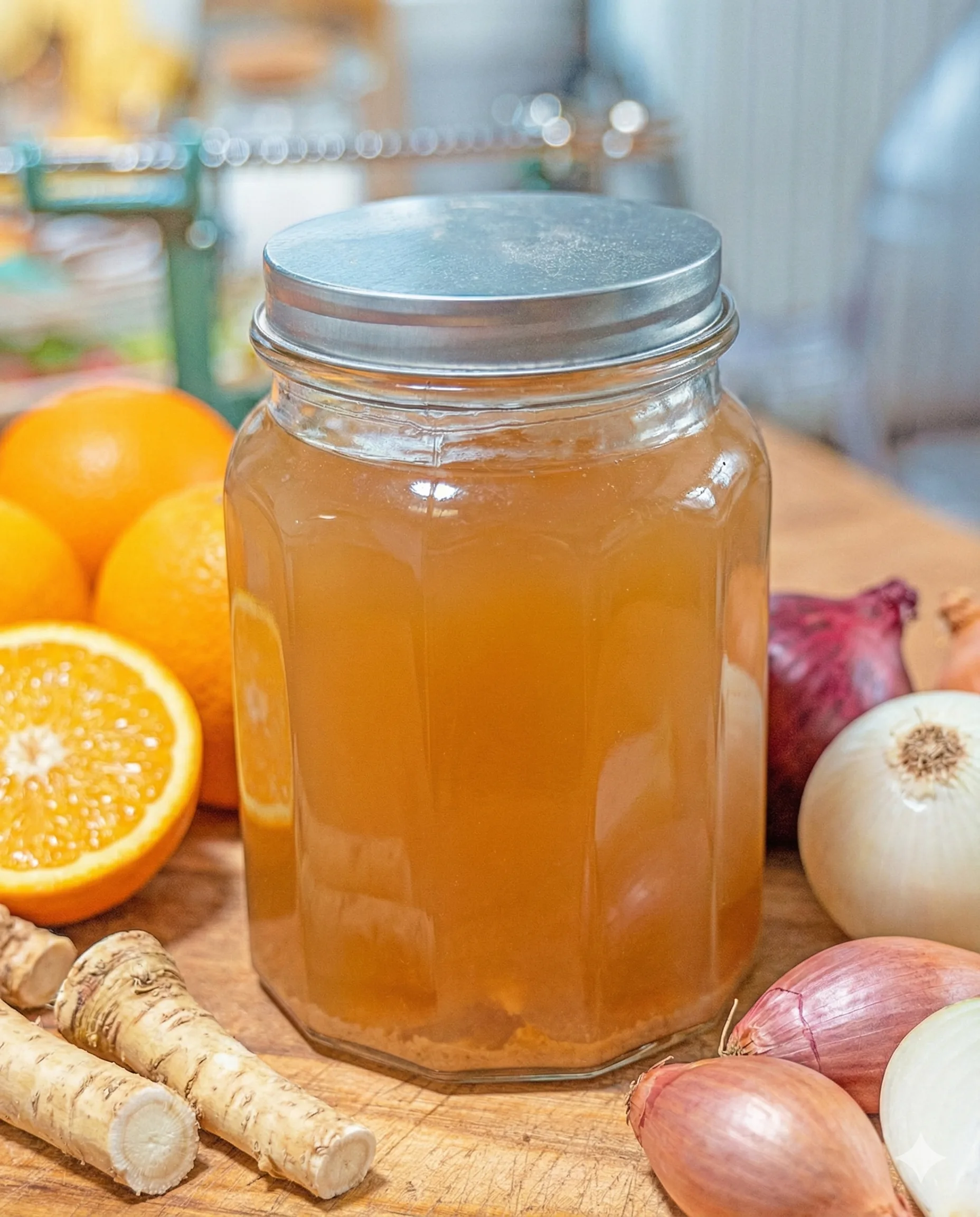
Quick Look: Fire Cider
- Type: Infused vinegar tonic (raw, unpasteurized)
- Made from: Apple cider vinegar, horseradish, ginger, garlic, onion, hot peppers, and raw honey
- Infusion time: 2–4 weeks
- Flavor: Spicy, tangy, pungent, with a honey finish
- Why make it: A traditional immune-supporting tonic for cold and flu season*
Jump to:
What Is Fire Cider?
Fire cider is an infused apple cider vinegar packed with pungent roots, alliums, and hot peppers. After a few weeks of steeping, you strain it, stir in raw honey, and you've got a potent tonic that's been used for generations as a natural immune booster.
The recipe traces back to herbalist Rosemary Gladstar, who coined the name in the 1970s. It's since become a staple in kitchens and natural food stores — the kind of thing people swear by once they try it.
Ingredients
- ½ cup fresh horseradish root, grated
- ½ cup fresh ginger, grated
- ½ cup fresh turmeric root, grated (optional, but I include it)
- 1 medium onion, chopped
- 10 cloves garlic, crushed
- 2 jalapeños or other hot peppers, sliced
- 1 lemon, zested and juiced
- 2 tablespoons dried rosemary (or a few fresh sprigs)
- Raw apple cider vinegar (enough to cover)
- ¼ cup raw honey (added after straining)
Equipment
- Quart-sized glass jar with plastic lid (vinegar corrodes metal)
- Cheesecloth or fine mesh strainer
- Grater or food processor
- Cutting board and knife
Instructions
- Prep your ingredients: Grate the horseradish, ginger, and turmeric. Chop the onion, crush the garlic, and slice the peppers. Add everything to a clean quart jar.
- Add the vinegar: Pour raw apple cider vinegar over the ingredients until everything is submerged by at least an inch. Use a plastic lid or put parchment paper under a metal lid to prevent corrosion.
- Steep: Store in a cool, dark place for 2–4 weeks. Shake the jar daily (or whenever you remember).
- Strain: After 2–4 weeks, strain through cheesecloth into a clean jar. Squeeze out as much liquid as you can. Compost the solids.
- Add honey: Stir in raw honey to taste — start with ¼ cup and adjust. The honey balances the heat and helps it go down easier.
- Store: Keep in the fridge. It lasts for months.
Variations
| Swap or Add | What It Does |
|---|---|
Habanero instead of jalapeño | Much more heat — use sparingly |
Orange peel | Adds citrus brightness |
| Fresh thyme | Earthy, savory depth |
| Black peppercorns | Subtle heat, helps turmeric absorption |
| Echinacea root | Traditional immune herb |
| Fresh rosemary | Piney, aromatic |
| Omit honey | Keeps it vegan and sugar-free (more intense flavor) |
How to Use Fire Cider
- Straight: Take 1–2 tablespoons daily during cold season, or at the first sign of illness
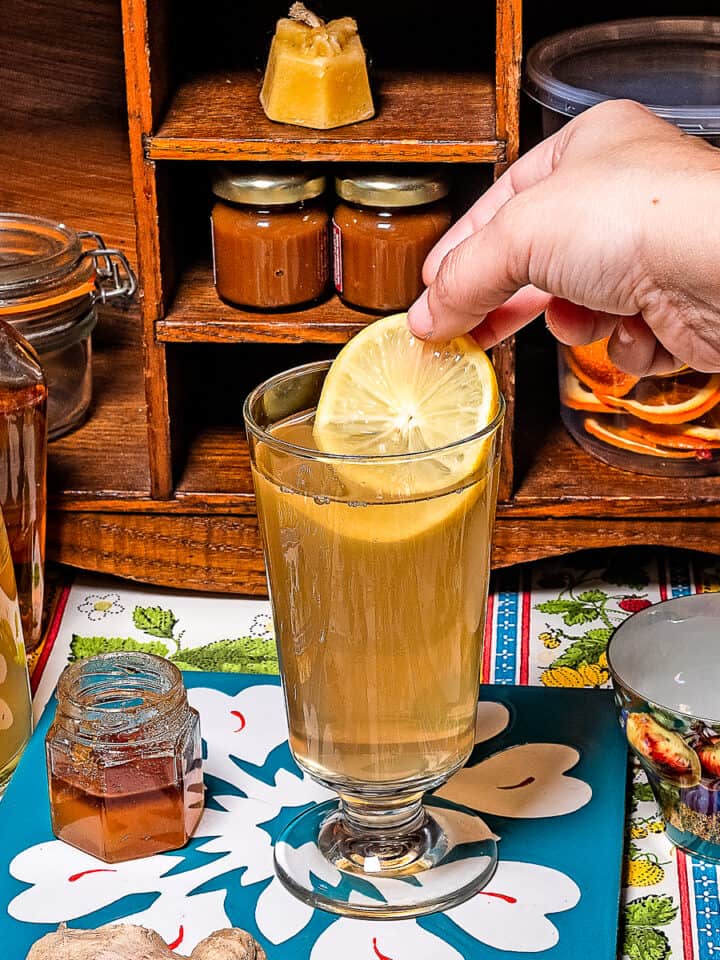
- In a hot toddy: Add 1 oz to hot water, honey, and lemon — see my hot toddy without alcohol recipe
- As a salad dressing: Mix with olive oil for a punchy vinaigrette
- On food: Drizzle over roasted vegetables, rice bowls, or avocado toast
- In broth: Add a splash to bone broth or miso soup
How to Know It's Working
During the infusion, you'll notice the vinegar changing color — it'll take on a golden or amber hue from the turmeric and ginger. The smell will get more pungent. This is normal. Taste it after two weeks — if it's got a good kick and the flavors have melded, it's ready. If it still tastes like raw vinegar, give it another week.
Storage and Shelf Life
Fire cider keeps in the fridge for several months — some people say up to a year, though mine never lasts that long. The vinegar and honey are both natural preservatives. If it ever looks cloudy, smells off, or develops mold, toss it and make a new batch.
FAQ
What does fire cider taste like?
Spicy, tangy, and pungent — with a hit of honey sweetness at the finish. The horseradish and garlic hit your sinuses first, then the ginger and pepper warmth settles in. It's intense, but in a wake-you-up way.
Is fire cider actually good for you?
Each ingredient has its own traditional use: garlic and ginger for immune support, horseradish for clearing sinuses, apple cider vinegar for digestion, honey for soothing. Whether it "works" is up to you and your body — but people have been making versions of this for centuries.
Can I buy fire cider instead of making it?
Yes — many natural food stores carry it now. But homemade gives you control over the heat level and ingredients, and it's much cheaper per ounce.
Why is it called fire cider?
The name comes from herbalist Rosemary Gladstar, who popularized the recipe in the 1970s. "Fire" refers to the heat from the peppers and horseradish.
Can I make fire cider without horseradish?
You can, but it won't be the same — horseradish is what gives fire cider its sinus-clearing punch. If you can't find fresh horseradish, use extra ginger for heat.
Sources
- National Institutes of Health: Ginger
- Gladstar, Rosemary. Rosemary Gladstar's Medicinal Herbs: A Beginner's Guide
- National Center for Complementary and Integrative Health: Garlic
- Journal of Ethnopharmacology: Antimicrobial properties of allicin from garlic
Fire Cider
Ingredients
- ½ cup fresh horseradish root, grated
- ½ cup fresh ginger, grated
- ½ cup fresh turmeric root, grated (optional, but I include it)
- 1 medium onion, chopped
- 10 cloves garlic, crushed
- 2 jalapeños or other hot peppers, sliced
- 1 lemon, zested and juiced
- 2 tablespoons dried rosemary (or a few fresh sprigs)
- Raw apple cider vinegar (enough to cover)
- ¼ cup raw honey (added after straining)
Instructions
- Prep your ingredients: Grate the horseradish, ginger, and turmeric. Chop the onion, crush the garlic, and slice the peppers. Add everything to a clean quart jar.
- Add the vinegar: Pour raw apple cider vinegar over the ingredients until everything is submerged by at least an inch. Use a plastic lid or put parchment paper under a metal lid to prevent corrosion.
- Steep: Store in a cool, dark place for 2–4 weeks. Shake the jar daily (or whenever you remember).
- Strain: After 2–4 weeks, strain through cheesecloth into a clean jar. Squeeze out as much liquid as you can. Compost the solids.
- Add honey: Stir in raw honey to taste — start with ¼ cup and adjust. The honey balances the heat and helps it go down easier.
- Store: Keep in the fridge. It lasts for months.
Notes
How to Use Fire Cider
- Straight: Take 1–2 tablespoons daily during cold season, or at the first sign of illness
- In a hot toddy: Add 1 oz to hot water, honey, and lemon — see my hot toddy without alcohol recipe
- As a salad dressing: Mix with olive oil for a punchy vinaigrette
- On food: Drizzle over roasted vegetables, rice bowls, or avocado toast
- In broth: Add a splash to bone broth or miso soup
Nutrition Information:
Yield:
32Serving Size:
1Amount Per Serving: Calories: 33Total Fat: 0gSaturated Fat: 0gUnsaturated Fat: 0gSodium: 23mgCarbohydrates: 8gFiber: 2gSugar: 3gProtein: 1g




Comments
No Comments