
Rosemary tea is my go-to when I need to clear my head — literally. That piney, aromatic steam opens up my sinuses while the warm mug settles me into focus mode.
I started brewing it during long writing days when I needed something caffeine-free that still felt like it was doing something. Turns out, there's science behind that instinct — rosemary's essential oils have been linked to improved memory and concentration in several studies.

Quick Look: Rosemary Tea
- Type: Herbal infusion
- Made from: Fresh rosemary sprigs and hot water
- Brew time: 5–7 minutes
- Flavor: Piney, aromatic, and refreshing
- Why drink it: A warming herbal tea known for supporting focus, digestion, and circulation*
The aroma of rosemary, which comes from its essential oils, is said to improve cognition and memory in several studies. Plus, it couldn't be easier to make.
Jump to:
Ingredients

Rosemary - an herb for memory
Rosemary is a popular herb with a wide range of benefits—most notably, an improved memory. In addition, Rosemary tea is beneficial for the health of your brain and whole body. Both fresh and dried rosemary work for making tea, but I prefer to use fresh.
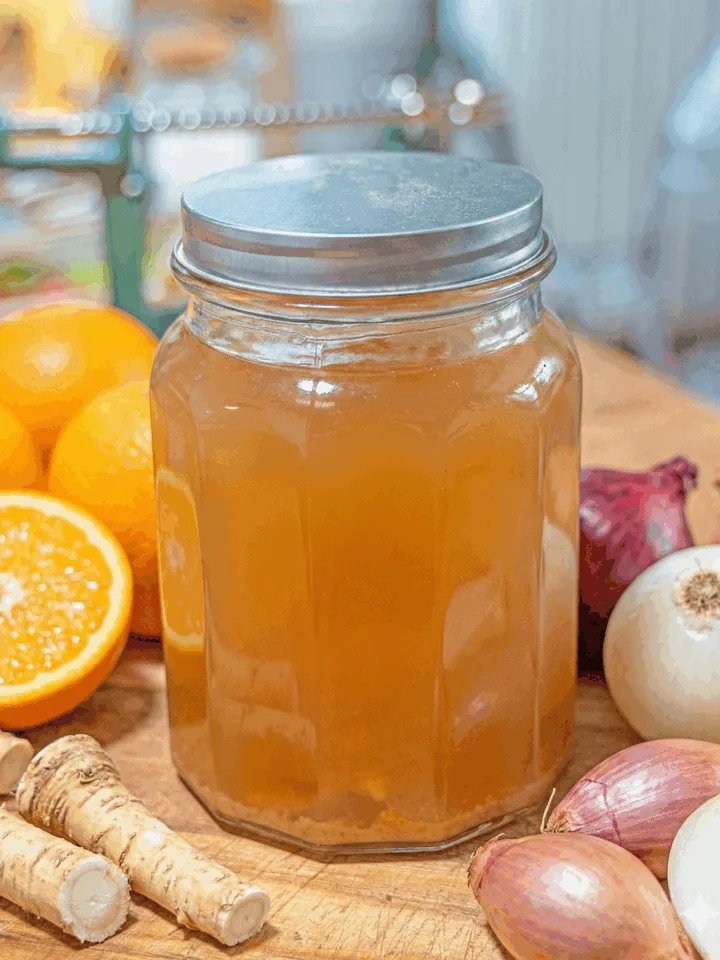
Lemon infused honey
Honey is a delicious and powerful sweetener that's only made more potent and complex in flavor by infusing and fermenting with it!
My homemade lemon fermented honey results in a beautiful, thin syrup that frankly tastes like sunshine. Other simple honey recipes offer great ways to utilize this pantry staple.
How to make rosemary herb tea
The process for making rosemary tea is straightforward: all you need is water, an infuser (or something else that will hold the rosemary), and fresh or dried rosemary sprigs. Here's how to do it!
Start by heating water to boiling in a pot or tea kettle on the stove.
As you wait for the tea kettle to boil, get out a mug and add the rosemary leaves to it. Both fresh or dried rosemary leaves, but new leaves taste better.
Rip them off the stem if you're using whole fresh rosemary sprigs. However, if you want to use an entire dry twig, there's no need to pull off any leaves because they'll fall off on their own during the brewing process. You can also grind up dried rosemary leaves into powder if that's easier for you to find in stores.
I'm using fresh rosemary leaves; we recommend one teaspoon of ground dried leaves or two teaspoons of whole dried leaves per cup of tea.
Once the water has come to a boil, pour it into your mug over the rosemary leaves and let them steep for about four minutes (or longer if you prefer stronger tea).


Variations
| Variation | Add to Your Cup |
|---|---|
| Rosemary Lemon Tea | 1 tablespoon fresh lemon juice |
| Rosemary Honey Tea | 1-2 teaspoon raw honey or fermented honey |
| Rosemary Ginger Tea | 2-3 slices fresh ginger |
| Rosemary Mint Tea | 3-4 fresh mint leaves |
| Rosemary Lavender Tea | ½ teaspoon dried lavender |
| Iced Rosemary Tea | Brew strong, pour over ice |
Three other quick herb and herbal drink recipes

FAQ
What are the benefits of rosemary tea?
Rosemary tea is traditionally used to support memory and focus, aid digestion, and promote circulation. The aromatic compounds in rosemary — particularly rosmarinic acid and carnosic acid — have antioxidant and anti-inflammatory properties. Some people also drink it to ease headaches, support hair health, and calm an upset stomach.
Can I drink rosemary tea every day?
Most people can enjoy rosemary tea daily in moderate amounts (1-2 cups). However, rosemary contains compounds that can be irritating in large doses, so stick to culinary amounts rather than concentrated supplements. If you're pregnant, breastfeeding, or on blood thinners, check with your doctor first.
Is rosemary tea good for memory?
Research suggests it may help. Several studies have found that the aroma of rosemary can improve cognitive performance and alertness. Drinking the tea gives you both the aroma and the beneficial compounds, though more research is needed on the tea specifically. Anecdotally, many people (myself included) reach for rosemary tea when they need to focus.
Does rosemary tea have caffeine?
No. Rosemary tea is naturally caffeine-free, which makes it a great option for evenings or for anyone avoiding caffeine. It's an herbal infusion, not a true tea from the Camellia sinensis plant.
Can rosemary tea help with hair growth?
Rosemary has a reputation for supporting hair health — rosemary oil is a popular natural remedy for thinning hair. While drinking the tea isn't the same as applying it topically, some people use cooled rosemary tea as a hair rinse. The tea may support overall circulation, which could indirectly benefit scalp health.
Is rosemary tea safe during pregnancy?
While it may have many benefits, there are some side effects to consider when making rosemary tea, including the following:
Pregnant women should avoid consuming rosemary tea due to its potential toxicity.
If you are allergic to any plants in the mint family, you should avoid consuming rosemary because it may cause an allergic reaction. If you experience any symptoms after drinking rosemary tea, such as hives or itchy eyes, seek medical attention immediately.

Rosemary Tea
Winter's the perfect time to share how to make rosemary tea. Rosemary is a delicious, easy-to-use culinary herb that imparts a fresh, piney flavor to meat, vegetables, and even cocktails.
Ingredients
- 1. cup of water
- 1 sprig of rosemary
- 1 tablespoon lemon fermented honey
Instructions
- Bring water to a boil, one cup per person.
- To your mug, add two teaspoons of fresh rosemary leaves (or one teaspoon of dried rosemary)
- Once the water has reached a boil, add water to the mug.
- Let it steep for 10 minutes
- Strain it into a cup using a fine-mesh strainer or cheesecloth, or remove the whole sprig.
- Add lemon fermented honey to taste.
Nutrition Information:
Yield:
1Serving Size:
1Amount Per Serving: Calories: 72Total Fat: 0gSaturated Fat: 0gTrans Fat: 0gUnsaturated Fat: 0gCholesterol: 0mgSodium: 11mgCarbohydrates: 19gFiber: 1gSugar: 18gProtein: 0g




Comments
No Comments